
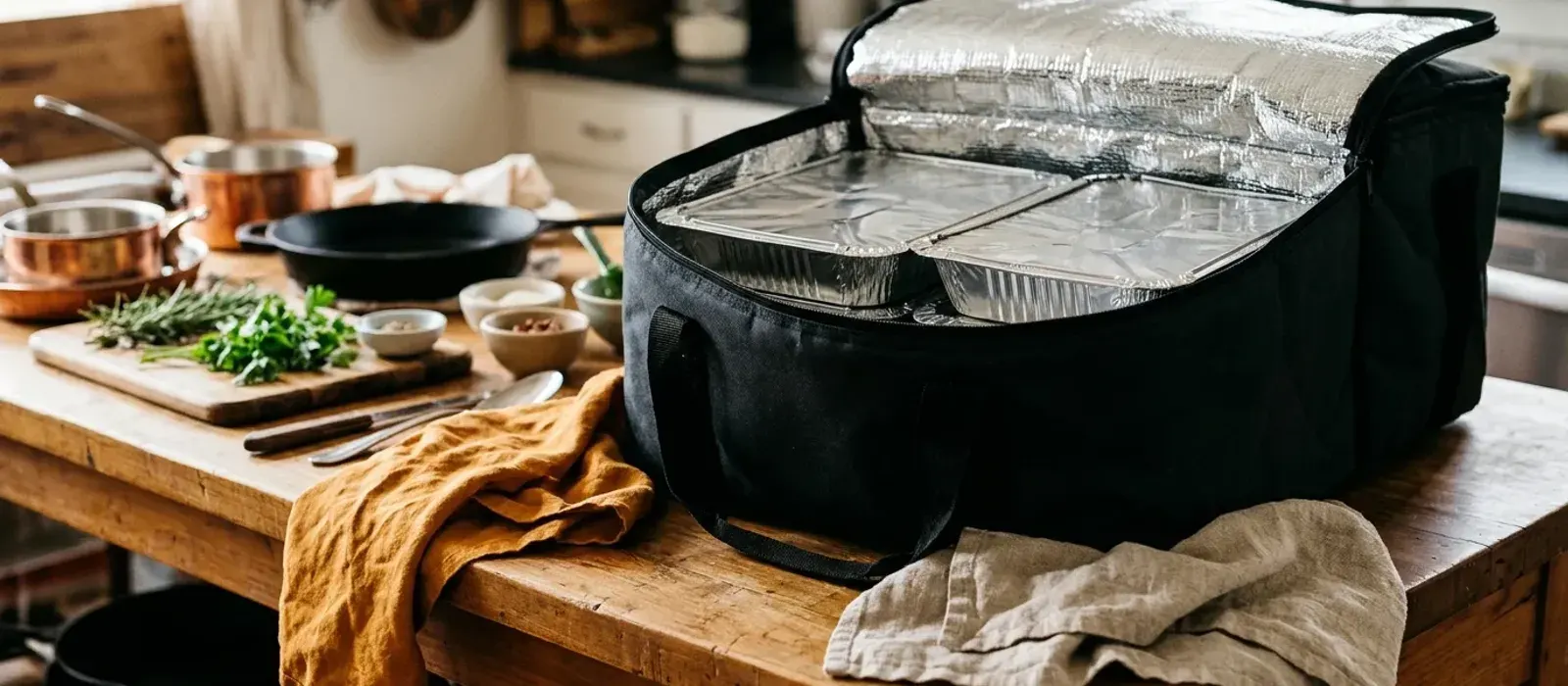
The USDA Food Safety and Inspection Service (FSIS) rule is short: never leave perishable food out of refrigeration for more than 2 hours, and no more than 1 hour if the temperature is above 90°F. That applies to meat, poultry, eggs, casseroles, salads and most catered dishes. The clock stops mattering only if hot food stays at 140°F or above and cold food at 40°F or below. Here is how to plan a catered party around that rule.
The Danger Zone: 40°F to 140°F
FSIS explains that bacteria grow most rapidly between 40°F and 140°F, doubling in number in as little as 20 minutes. Food that sits in that range for too long can grow bacteria such as Salmonella, Staphylococcus aureus and E. coli O157:H7 to levels that cause illness.
| Situation | Safe limit (USDA FSIS) |
|---|---|
| Perishable food at room temperature | 2 hours, then discard |
| Air temperature above 90°F (outdoor summer event) | 1 hour, then discard |
| Hot food held at 140°F or above | Stays out of the danger zone while held hot |
| Cold food held at 40°F or below | Stays out of the danger zone while held cold |
| Food taken out of a cooler | 2-hour clock starts (1 hour above 90°F) |
| Leftovers to the fridge | Within 2 hours, in shallow containers |
FSIS notes some exceptions to the 2-hour rule for foods such as cookies, crackers, bread and whole fruit. Everything with meat, poultry, eggs, dairy or cooked grains should be treated as perishable.
Keeping Buffet Food Hot
"Warm" is not the same as safe. FSIS says hot food must stay at 140°F or above, checked with a food thermometer. Ways to do that:
- Chafing dishes with fuel or electric heat under each pan.
- Preheated steam tables or warming trays.
- Slow cookers set to hold food that is already hot.
- A preheated oven for backup pans waiting to go out.
One catch: FSIS says reheating in slow cookers and chafing dishes is not recommended, because food may stay in the danger zone too long while it heats up. Reheat to 165°F on the stove, in the oven or in the microwave first, then move the food into the chafing dish to hold it.
Keeping Buffet Food Cold
Cold food such as chicken salad, deli platters, shrimp, dips and cut fruit must stay at 40°F or below. FSIS recommends nesting serving dishes in bowls of ice. Another FSIS tip: use small platters and swap them for fresh platters from the refrigerator often, rather than adding new food on top of food that has already been sitting out.
Drop-Off Catering: Timing the Delivery
With drop-off catering no staff stays to manage the food, so the host is in charge of the clock. FSIS take-out guidance says to refrigerate perishable food as soon as possible, always within 2 hours after purchase or delivery (1 hour above 90°F). Practical steps:
- Schedule delivery close to serving time. If food arrives 90 minutes before guests eat and is not held hot or cold, most of the 2-hour window is already gone.
- Ask how food arrives. Hot in insulated carriers? With chafing racks and fuel? Cold on ice? Get it in writing on the quote (see the catering checklist).
- Write down the delivery time and set a phone alarm for the 2-hour mark.
- Check temperatures on arrival with a food thermometer: 140°F or above for hot, 40°F or below for cold.
- Refrigerate anything not served right away.
Full-service caterers usually handle holding temperatures for you, but it is still worth confirming in the contract. To compare what each vendor includes, see how to compare catering quotes.
Food Trucks and Outdoor Events
Outdoor parties are where the 1-hour rule matters most. FSIS gives the example of an outdoor picnic in summer: if the air is above 90°F, perishable food can sit out for only 1 hour. For cold food bought for an outdoor event, FSIS says a cooler packed with plenty of ice or frozen gel packs works as a refrigerator substitute; keep it in the shade, and remember the 2-hour (or 1-hour) clock starts when food leaves the cooler.
Food trucks cook to order, so the food usually goes straight from the grill to the guest. Trucks and caterers are licensed by state and local health departments, most of which base their rules on the FDA Food Code. If a truck also leaves trays out for self-service, the same 2-hour and 1-hour limits apply to those trays. See food truck catering cost for booking details.
What to Do with Leftovers
- Get leftovers into the refrigerator within 2 hours (1 hour above 90°F). Food that has already sat out longer than that should be thrown away, not packed up.
- Divide large amounts into shallow containers so they cool quickly. Slice roasts and turkey into smaller pieces.
- Use refrigerated leftovers within 3 to 4 days, or freeze them (FSIS: 3 to 4 months for best quality).
- Reheat leftovers to 165°F; bring sauces, soups and gravies to a rolling boil.
- FSIS's short version: "When in doubt, throw it out!"
Planning amounts carefully cuts down on leftovers in the first place. Our food quantity calculator estimates portions by guest count (rule of thumb, not an official figure).
Figures are from USDA FSIS and FDA pages checked on 2026-11-16. Licensed caterers and food trucks must follow their state and local health code, which may be stricter.
Common Questions
Can I Put Food Back in the Fridge After It Sat Out for 3 Hours?
No. USDA FSIS says to discard perishable food left at room temperature longer than 2 hours (1 hour above 90°F). Refrigerating it afterward does not make it safe.
Does Food in a Chafing Dish Have a Time Limit?
Not while it stays at 140°F or above. Check with a thermometer; if it drops below 140°F, the 2-hour clock applies. FSIS advises reheating food elsewhere first, not in the chafing dish.
How Long Can a Cold Platter Sit on Ice?
As long as the food itself stays at 40°F or below. FSIS suggests small platters replaced often from the refrigerator instead of topping up a platter that has been out.
Sources
- USDA FSIS: "Danger Zone" (40°F–140°F): Bacteria double in as little as 20 minutes between 40°F and 140°F; never leave food out over 2 hours (1 hour above 90°F); hold hot food in chafing dishes, cold food on ice.
- USDA FSIS: Safe Handling of Take-Out Foods: Refrigerate delivered food within 2 hours; small platters swapped often; coolers for outdoor events; do not reheat in chafing dishes or slow cookers; exceptions such as bread and whole fruit.
- USDA FSIS: Leftovers and Food Safety: Shallow containers; leftovers 3 to 4 days refrigerated or 3 to 4 months frozen; reheat to 165°F; 1 hour above 90°F at outdoor picnics.
- FDA Food Code: The model code that state and local health departments use to regulate restaurants and food service, including caterers and food trucks.
About This Guide
Written and reviewed by the catering.broker editorial team. Last reviewed November 16, 2026. catering.broker is published by Cute and Honey LLC, Houston, Texas. We take no payment from caterers for placement, and nothing on this page is a paid recommendation. Spotted an error? Tell us.