
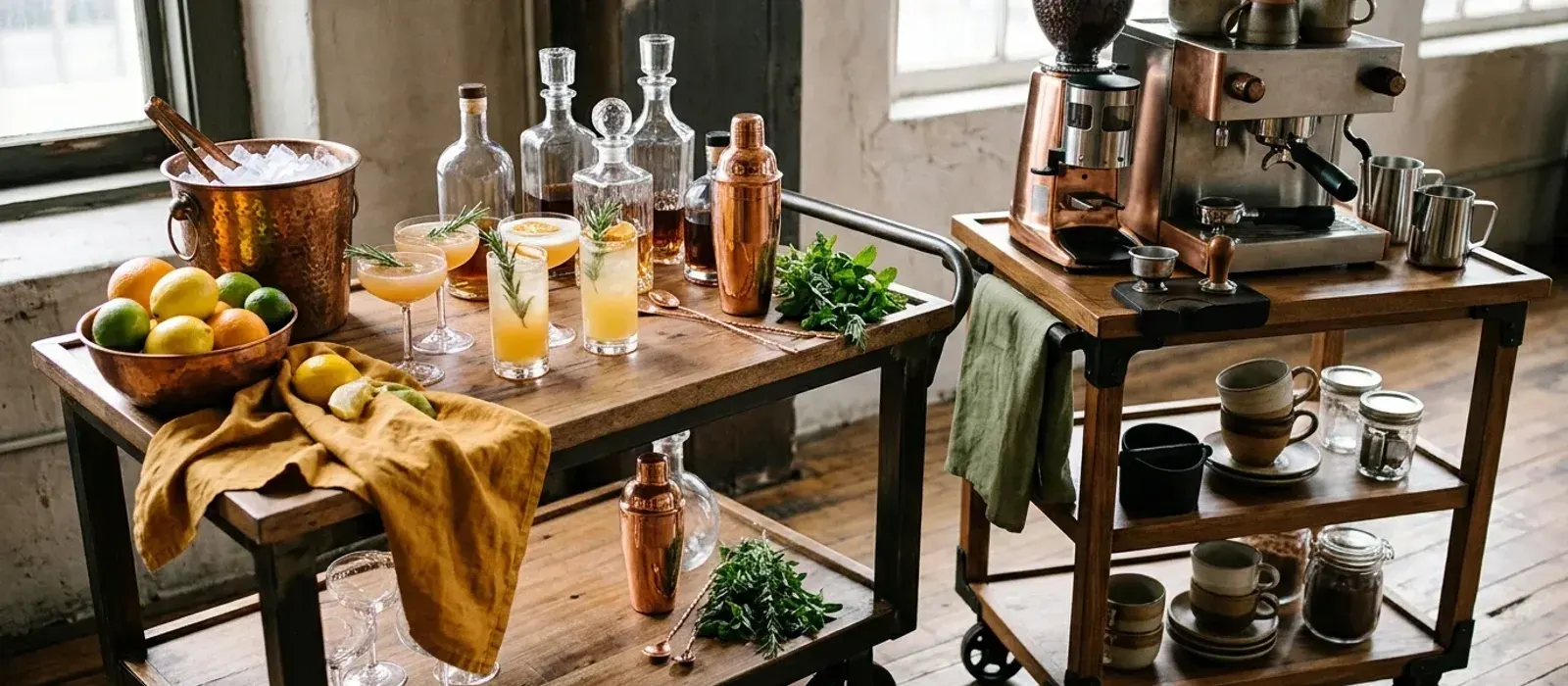
Start with a simple rule of thumb many planners use: about one drink per guest per hour. Multiply guests by hours to get total drinks, then turn drinks into bottles and cases with the standard drink sizes below. The rule is a planning shortcut, not a measured average; your crowd, the time of day and how much food you serve all change the real number.
What Counts as One Drink
The National Institute on Alcohol Abuse and Alcoholism (NIAAA) defines a U.S. standard drink as about 14 grams (0.6 fl oz) of pure alcohol. That equals:
| Drink | One standard drink | Typical alcohol |
|---|---|---|
| Regular beer | 12 fl oz | about 5% |
| Malt beverage or hard seltzer | 8–10 fl oz | about 7% |
| Table wine | 5 fl oz | about 12% |
| Spirits (vodka, gin, rum, tequila, whiskey) | 1.5 fl oz | about 40% |
NIAAA notes that alcohol content varies between products, so a strong craft beer or a big wine pour counts as more than one drink.
Bottle Math
A standard 750 ml bottle holds about 25.4 fl oz. Working from the NIAAA serving sizes:
- Wine: 25.4 ÷ 5 oz ≈ 5 glasses per bottle.
- Spirits: 25.4 ÷ 1.5 oz ≈ 16–17 drinks per 750 ml bottle (we plan on 16 to be safe).
- Beer: one 12 oz can or bottle = one drink, so a 24-pack case = 24 drinks.
Worked Table: 4-Hour Party
Using the one-drink-per-guest-per-hour rule of thumb for a 4-hour event. Each column shows what you would need if all drinks were that type, so you can mix and match (for example, half the drinks as wine means half the wine bottles).
| Guests | Total drinks | Wine only (750 ml bottles) | Beer only (24-can cases) | Spirits only (750 ml bottles) |
|---|---|---|---|---|
| 50 | 200 | 40 | 9 (8.3, rounded up) | 13 (12.5, rounded up) |
| 100 | 400 | 80 | 17 (16.7) | 25 |
| 150 | 600 | 120 | 25 | 38 (37.5) |
Example mix for 100 guests, 4 hours (400 drinks): if you expect 40% wine, 40% beer and 20% cocktails, that is 160 wine drinks (32 bottles), 160 beers (about 7 cases) and 80 spirit drinks (5 bottles). The split is just an example; pick one that fits your guests.
Adjusting the Estimate
- Not everyone drinks. Count only guests who will drink alcohol if you know the number; children and non-drinkers lower the total.
- Toasts: a champagne toast is usually a smaller pour; at 5 oz a bottle serves about 5, so smaller pours stretch further.
- Mixers and ice: cocktails need mixers, garnishes and plenty of ice, which caterers often list as separate line items.
- Leftovers: ask your store whether unopened bottles can be returned before you buy extra.
Non-Alcoholic Options
Plan water and at least one or two non-alcoholic choices for every guest, not just non-drinkers: sparkling water, soda, iced tea, lemonade or alcohol-free beer and wine. Serving food with drinks also helps; our food quantity calculator estimates how much to order, and the food per person guide explains the portions.
Do You Need a Bartender?
For larger parties, a bartender or bar service keeps pours consistent, watches guest IDs and can stop serving someone who has had too much. Many caterers offer bar service or work with mobile bartenders; ask whether they hold the license or insurance required in your state, whether you or they supply the alcohol, and how bar staff are charged. Our directory lists caterers and bar services, and the catering cost calculator helps you budget the total.
Host Responsibility
Serving alcohol carries legal responsibility. The legal drinking age is 21 in every state, and states generally ban supplying alcohol to people under 21 (some allow narrow exceptions). Many states also have "social host" laws that can hold a host responsible for underage drinking at a party they host. Rules for serving adults, and for any harm a guest causes after drinking, vary by state. This is general information, not legal advice; check your state's laws or ask a lawyer, and ask your venue and insurer about their rules before the party.
Simple safety steps help everyone: check IDs, stop serving guests who show signs of intoxication, close the bar before the party ends, and arrange rides or transport.
If a Guest Has Had Too Much
Know the warning signs before the party, and make sure your bartender or a sober host does too. NIAAA lists these signs of alcohol overdose:
- Mental confusion or stupor, or trouble staying conscious
- Vomiting or seizures
- Slow breathing (fewer than 8 breaths a minute) or irregular breathing
- Slow heart rate, clammy skin, very low body temperature, or bluish or pale skin
If you see these signs, call 911 and do not leave the person alone. If they are vomiting, help them lean forward; if they are lying down or unconscious, roll them onto their side. NIAAA warns that cold showers, hot coffee and walking do not reverse an overdose and can make things worse, and that blood alcohol can keep rising after someone stops drinking, so "sleeping it off" is not safe. Tell responders what and how much the person drank.
Quick Planning Checklist
- Count guests who will drink and multiply by the hours of the party (rule of thumb: one drink per guest per hour).
- Pick a drink mix and convert with the bottle math above.
- Add non-alcoholic drinks, water, mixers and ice.
- Decide on self-serve or a bartender, and confirm venue rules.
- Plan rides home, and add it all to your catering checklist.
Drink totals use a planning rule of thumb (one drink per guest per hour), not survey data. Serving sizes and bottle math come from NIAAA's standard drink definition. Published by Cute and Honey LLC.
Common Questions
How Many Glasses of Wine Are in a Bottle?
A 750 ml bottle holds about 25.4 fl oz, so at NIAAA's 5 oz standard pour it serves about 5 glasses.
How Many Drinks Are in a Bottle of Liquor?
A 750 ml bottle holds about 25.4 fl oz, or about 16–17 drinks at NIAAA's 1.5 oz standard serving of 40% spirits.
How Much Alcohol for 100 Guests?
Using the rule of thumb of one drink per guest per hour, a 4-hour party for 100 guests needs about 400 drinks, for example 80 bottles of wine if all wine, or 17 cases of beer if all beer.
Sources
- NIAAA: What Is a Standard Drink?: 14 g / 0.6 fl oz pure alcohol: 12 oz beer at 5%, 8–10 oz malt beverage at 7%, 5 oz wine at 12%, 1.5 oz spirits at 40%.
- NIAAA: Understanding the Dangers of Alcohol Overdose: Overdose signs, call 911, do not leave the person alone; coffee or cold showers do not help; BAC can keep rising.
- Price ranges, portions and staff ratios: catering.broker planning assumptions, explained in how we work. They are not quotes or survey averages.
About This Guide
Written and reviewed by the catering.broker editorial team. Last reviewed November 16, 2026. catering.broker is published by Cute and Honey LLC, Houston, Texas. We take no payment from caterers for placement, and nothing on this page is a paid recommendation. Spotted an error? Tell us.